
The Royall House and Slave Quarters
Medford, Massachusetts


A Unique Window into the Past

The home of one of the richest families in New England and the enslaved Africans who made their lifestyle possible. Architecture, furnishings, and artifacts bear witness to their entwined stories. The Home.

Isaac Royall

Isaac Royall never intended to abandon hearth and home. He just got caught on the wrong side of the Revolution. Royall Family History.

Enslaved People at the Royall House

When the Royalls moved to Medford from Antigua, they brought 27 slaves with them. New England slavery was not benign. The Royall Slaves.

Archeology

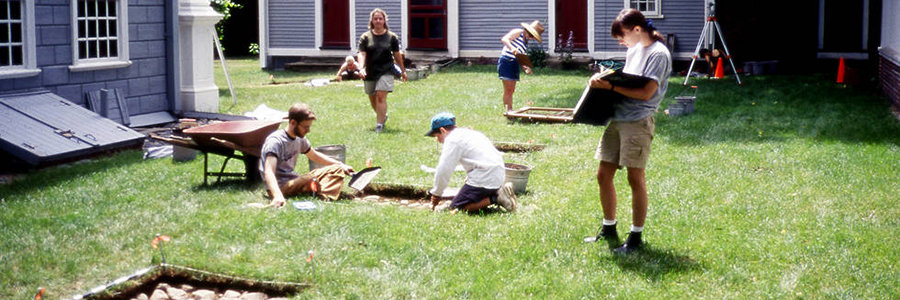
A full-scale dig has uncovered more than 5,000 objects from the Royall family and their slaves. The Dig.

Family Connections

Many families have been connected to the Royall House since 1732. Families.

Visitor Schedule

The Royall House and Slave Quarters will re-open for weekend Tours on May 26, 2012 (tours at 1, 2, 3, and 4 p.m. on the hour). Tour inquiries and reservations for Group Tours (offered from mid-March, 2012 onward) may arranged by e-mailing our Executive Director at Cloaking . More details at: Visitor Guide.

Meeting Space, Event Facility

Meeting Space, Event Facility

Our beautiful grounds are available for rental. Have your special event at the Royall House. Rental information.

Getting There

Getting There

The Royall House and Slave Quarters are located at 15 George Street in Medford, Massachusetts. Detailed Map.

Massachusetts Foundation for The Humanities

This web site is funded in part by the Massachusetts Foundation for the Humanities.

Follow us on Facebook

Follow us on Facebook

Follow this link and click the "Like" button: Royall House and Slave Quarters on Facebook.

Our Mission

The Royall House Association explores the meanings of freedom and independence before, during and since the American Revolution, in the context of a household of wealthy Loyalists and enslaved Africans.

Our Annual Benefit - Giving Voice

An Afternoon with Playwright Lydia Diamond

June 9, 2012, 3-5 p.m.

On the grounds of the Royall House and Slave Quarters

15 George Street, Medford, Massachusetts

Music - House Tours - Museum Exhibits - Refreshments

Lydia Diamond

Lydia R. Diamond recently made her Broadway debut with her play Stick Fly. Her many award-winning plays, produced at theaters and universities around the country, address complex issues of race and slavery. She says she finds it healing to tell such stories, that giving these issues a voice and a context is empowering. Boston Globe theater critic Louise Kennedy wrote, "Diamond always examines these huge topics through a specific human lens, and she always lets her characters reveal themselves rather than explaining them." Ms. Diamond is currently on the faculty at Boston University.

Tickets are $35 for members, and $45 for non-members. All tickets will be held at the door.

Sponsorships are also available - Sponsors' names will be listed in a special color version of our members' newsletter for distribution throughout the 2012 Tour Season, and will also be listed at the event and on our website. Sponsorships start at $25 and donations are fully tax deductible.

For more information, tickets and/or Sponsorships, please use this Ticket and Sponsorship Form (PDF)

For questions, please send an e-mail to Cloaking

The Royall House and Slave Quarters

Isaac Royall House -- West Facade

West Façade, Royall House

Photo © Geoffrey Gross 2007. From Great Houses of New England; Rizzoli, 2008. Used by permission.

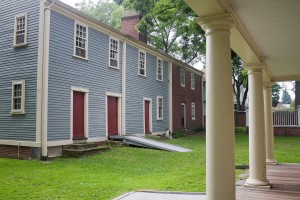
Slave Quarters

Slave Quarters

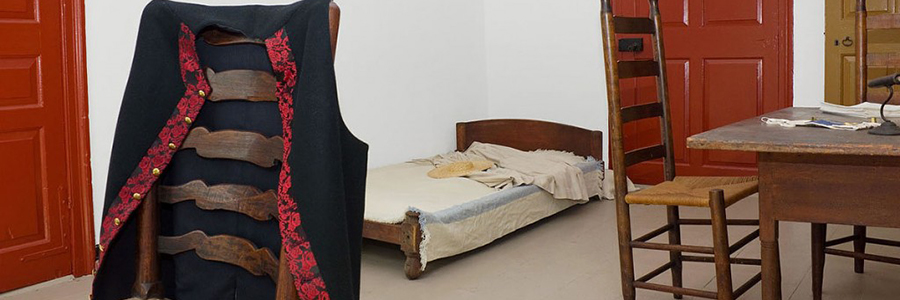
The Royall House and Slave Quarters were built in 1732-1737. The House is one of the finest 18th century buildings in New England; the Slave Quarters is the only such structure in the Northern United States. Both the buildings and grounds are a National Historic Landmark. Together, these unique structures tell the intertwined stories of liberty and bondage, independence and slavery, as they have been played out not only in Colonial times, but throughout American history.

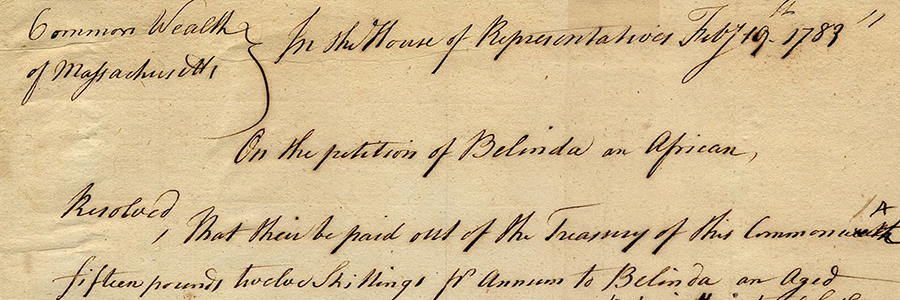
Among these stories is that of Belinda, one of the enslaved Africans owned by the Royalls; after their departure, she successfully petitioned the Massachusetts Legislature in 1783 for a pension. Of course, these stories played out in the context of the American Revolution. After the departure of the Royalls to England, General John Stark made the Royall House his headquarters in the first days of the Revolutionary War. General George Washington helped plan the siege of Boston from here.

For more information, see the Royall House and Slave Quarters.


Funding for this web site provided by the Massachusetts Foundation for the Humanities.